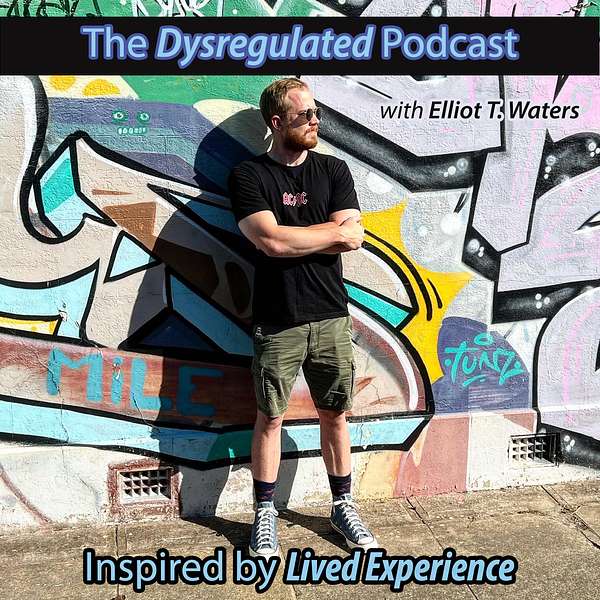
The Dysregulated Podcast
Follow my journey through the chaos of mental illness and the hard-fought lessons learned along the way.
Lived experience is at the heart of this podcast — every episode told through my own lens, with raw honesty and zero filter.
This is a genuine and vulnerable account of how multiple psychological disorders have shaped my past and continue to influence my future.
The Dysregulated Podcast
Choosing Purpose Over the Dream I Once Had
This episode is about a hard reframe: stepping back from the dream of marriage and family, not out of bitterness, but honesty. Instead, I am investing my energy where growth is actually possible (I hope).
I talk about the grief that brings up for my inner child, the relief that comes with clarity of direction, and why focusing on career and purpose isn’t avoidance but a sign of maturity of the self. I discuss my nervous system limits (more on that soon), my mental health reality, and the cost of chasing dreams that perhaps aren't possible after all.
I also introduce Dysregulated Daily, a new YouTube series of short, honest check-ins coming soon.
Alright, time to launch!
--
Follow The Dysregulated Podcast:
Instagram – @elliot.t.waters
Facebook – The Dysregulated Podcast
YouTube – The Dysregulated Podcast (Official Channel)
Created by Elliot Waters — Inspired by lived experience.
Mental health insights, real stories, real conversations.
G'day everybody, my name is Ellie Waters, and you're listening to the DISS Regulator Podcast. As always, thank you for tuning in. Alright, today is New Year's Day, so I just want to say very quickly happy New Year's to all of you, my amazing listeners. You guys are all a bunch of legends. Thank you for your support in 2025 as we look forward to this year 2026. Now, I suppose it's at this point that I should be telling you all about my goals for 2026, the sort of direction that I want to be heading in. And I'll do that briefly, but I really want to focus mostly on I guess the goals that I'm leaving behind and not looking. You know, there's some areas in my life that are not going as I would have liked. And I was sort of hoping some of these areas that I'll talk about in a minute might have improved in 2025, but unfortunately that hasn't seemed to be the case. So as a result, I guess I'm re-adjusting my focus to goals that I believe are definitely attainable if I put the work in. So that's the plan. So the goals that I want to try and achieve, excuse me, want to achieve, that I'm trying to achieve is definitely related to career. It's all mostly career sort of stuff. Um, so I want to get back into the transport industry. So that's driving trucks or loading trucks with forklifts, all that sort of stuff. So I want to get out of retail if possible and get back into transport and logistics. And the reason I want to do that is because I want to then combine my other fixation because transport is definitely one of my fixations. Who would have thought, you know, autism, loving trucks and trains? Crazy, unheard of. Um, but my other fixation is of course mental health, which is why I'm talking to you right now on this platform. And the goal is to try and get them to be together, to marry them up. Because one of the goals that I'm leaving behind is marriage. So I want to try and change that construct a little bit and make it a career sort of goal, and then marriage is back on the table again, but not in the way that I guess most people would associate it. So, what I mean by marrying up is I want to get back into the transport industry, but then I want to do some research in the industry from a mental health psychology point of view. So that's combining my two fixations, and I want to get back into the industry driving or loading trucks or whatever. Um, well, not whatever, but I want to get back, you know, in the coal face sort of thing of the industry, so I can try and drive some cultural change from within because I'm pretty confident that it's going to be very difficult to try and change attitudes in the transport industry. Very hard men and women in the transport industry, um, if I can't prove my credentials as a transport operator myself. Now, of course, previously in a former career of mine, I have done all of that that I'm talking about, but I want to now really expand, I guess, my abilities as an operator and get more experience, um, potentially interstate sort of work, definitely line hall stuff, semi-trailer, B double sort of stuff. So when I'm talking to transport men and women, they know that I know what it's like to do what they do. And then hopefully I'll be able to drive the cultural change as far as mental health is concerned. Because unfortunately, in the transport and logistics industry here in Australia, uh, the mental health outcomes are not very good. So there was some data released, uh probably two, three months ago now, um, and uh it ranked all the main industries in Australia as far as the mental health outcomes are concerned, the metrics that they use. I can't remember the metrics that they use, but the results were pretty compelling. And out of the 13 main industries in Australia, transport and logistics ranked number 13. So that tells me there's some real well cultural issues in the industry, structural issues in the industry, um, but also tells me there's some great opportunity for change because um unfortunately uh the the need is definitely there, but I want to be a leader of that change. And to do so, I've got to get back into the industry, I've got to get back to the coal face, doing night shift, you know, sorting freight, driving trucks, doing deliveries, all that sort of stuff. And then hopefully from that really solid foundation, I'll be able to then use my mental health and psychology credentials to then drive change in the industry. That is the plan. That is the big goal for 2026. So, as far as the research mental health stuff is concerned, I am hoping that may mean a PhD at some point. But at the same time, to be able to do a PhD, I need to regulate my nervous system much better than I do at the moment because the anxiety that I have every day, unfortunately, um, tells me that if I was to do a PhD, say right now, things would crumble. And I know this because I've done my honours thesis in psychology and things did crumble that year. Although I got dragged across the line kicking and screaming, thank you to my supervisor, Associate Professor Miles Young, who I'm gonna get on the show soon. Um it was a very difficult year, and a PhD is that times 100. So, you know, for me to be able to achieve these goals that I'm talking about, um, I need to get my fundamentals correct. And that involves um keeping keeping myself regulated and within healthy parameters because another goal of mine for 2026 is certainly not to go back to hospital for mental health reasons again. That's the plan, really moving forward for the rest of my life. I don't want to go and stay in psychiatric wards anymore. I want to leave that behind, not the memories or the experiences gained or the wisdom, anything like that, and certainly not the people that I met along the way. Um, but I do want to leave the psychiatric ward credential stuff behind because I think it's time to launch and it's time to live a life that's worth living. You know what I mean? That's the big plan. I've spoken about it before. It's all about living a life that's worth living. And for me, my meaning and purpose, which is unbelievably important for everybody, but will be different for everybody. But for me, my meaning and purpose certainly is about improving um mental health outcomes in whatever, I guess, industry or community that I'm in. But this year and for the next few years in particular, the focus will be on transport and logistics and of course my own Newcastle community and you guys here on the podcast as well. So this is the plan as far as the podcast goes. Very soon I'm about to launch a new series. It's on YouTube. So if you're not aware, YouTube has all the dysregulated podcast episodes now. So if there's a friend of yours that wants to listen to the show but doesn't have Spotify or doesn't have Apple Podcasts, you can now listen to all episodes on YouTube. They're all uploaded there now. So go check that out if you'd like to. Um, but also I'm gonna start a video series. It's called Disregulated Daily, um, and it's gonna be all about my day-to-day fluctuations and dysregulation as far as my mood is concerned, because this is the thing, and I'm gonna explain this more in a in a uh, I guess, an introductory episode for the dysregulated daily series. But the thing is, every day for me is a battle, every single day. But the days that I'm able to record, I've said this before, the days I'm able to record, usually I'm feeling pretty good. And that's great, that's really good. But a lot of the wisdom and I think the experiences that I want people to see is me when things are not going well, because there's a lot of lessons to be learned from that as well, and that's maybe not captured here on the podcast in full because I am only able really to produce episodes when I'm feeling good. So the dysregulated daily series is going to be a very quick, like five-minute sort of video every single day, every day. That's the whole point, because I am dysregulated daily, so every day I want to do a five-minute little video and just give you all an update on how I'm going that day because you're going to see even more of my living experience, and you're going to see as well, I guess unfortunately, but in some ways it's good. And this, you know, and this is how I'm trying to justify my bad days, I suppose. But my bad days are now going to be captured, and we can all look at my bad days together. And that's the thing, see, because a lot of you guys may be having a few bad days here and there as well. Um, and I want you to know, and I want everyone to know, that they're not alone when it comes to mental illness. And I really think this video series is going to show, I guess, the other side of me that I talk about, but maybe don't experience in real time as I'm talking to you here on the show because I am feeling usually pretty good. So the dysregulated daily series is not going to be a reflection on my life. It's going to be a vr uh, excuse me, a reflection on that particular day. And there's going to be days where I'm laying in bed and all I'm going to do is to like a 10-second video saying, Yep, I'm alive, but this is hell. I'll talk to you tomorrow. You know, I can see those days are coming. Um, and although those days are very, very difficult, unbelievably difficult, um, I think there's a lot of a lot of value to be found. And again, a lot of wisdom and lessons. And um, I want to use those experiences for good and to show people that they're not alone, that I am definitely in the trenches with you, that is for sure. Um, but we can use our bad days, our tough days, to really, I guess, build the foundation for the good days. Because I do think you need to have some bad to have some good, you know. It's all about balance, and that's what life is all about. Some days are good, some days are not so good. But when you've got complex mental illnesses like I do, those bad days can be really bad and dangerous. But as I said, I think there's a lot of value to be gained from seeing me in those states, and I'm very excited. And oh, I've got to admit, I'm I'm looking forward to my next bad day. No, I'm not really. Um, but at the same time, it will be very enlightening, I think, and revealing. I think there'll be a lot of insights to be seen. So that's exciting. Dysregulated Daily, that is coming very, very soon on YouTube. Keep an eye out for that. If you've got me on social media um at elliott.t.waters on Instagram or by searching the dysregulated podcast on Facebook. Um, I will be updating the video series there as well. So keep an eye out for that. Alright, that's the good stuff. I think I've ticked it all off. And yeah, you know, yes, I want to get back into running, I want to get to the gym, I want to get fitter again and get rid of this gut that I've developed. That's the thing with some of these um these uh medications, they can um have a profound effect on your waistline. Now, very quickly, because this isn't the point of this episode, but you know, I've been on allanzepine, I've been on quatiapine or seracol, and both of those are renowned for putting weight on people. Now, when I was on both, I actually lost weight. So there you go, that's unusual. But now I'm on metazopine, the uh tetracyclic antidepressant, old school, but you know, good stuff, and quite um, yeah, yeah, it's popular as far as being prescribed is concerned because it's a good medication. But one of the main side effects is weight gain. And I thought I would avoid all that because you know the ceracol and the alazepine um never put weight on me, and they're you know, they're certainly renowned for it, uh especially a lanzepine. Um, and it never happened. So I was like, oh yeah, metazpine, she'll be right, you know, all good. But no, I am looking a little bit chubby. So um I I do have that goal, I guess, that everybody does too, which is to try and get a bit fitter and get in shape a little bit more and do all that sort of stuff. So, but anyway, that's the plan for 2026, which is to really focus on career, get back into the transport industry, um, and really get back, you know, into the real essence of the transport industry, you know, night shift stuff, loading, express freight, all that sort of stuff. I want to get back into that and um really build those credentials so I can have a really strong foundation and platform to be able to try and drive change in the industry as far as mental health is concerned, because stigma is a huge thing in the transport and logistics industry, but I'm pretty determined to do what I can to nullify that where possible. So stay tuned for that. They're big goals, lofty goals, you know. Like this is big stuff. Um, and to say I'm a little bit nervous would be an understatement, but at the same time, I'm very committed to this idea and I think um I think it's got wheels, you know. I really do. And I really want to help people um who are doing it tough but maybe don't feel as though they're in a position to change their their outlook or their life circumstances, um, and also people who feel as though they are alone because um we're all on this journey together, you know, and if we try and help each other along, I think um I think that'd be good for all of us. So, and we can really, you know, do what we can to help um those people in our communities that are doing it tough because there's plenty of people that are doing it tough. Um, and if you're one of them, trust me, I'm with you, I'm in the trenches next to you, we're in this together, and the dysregulated daily series is really going to showcase that, I think, and it's gonna be great. Um, even if a lot of the material, unfortunately, may be depressing. But hey, that's my life, you know. You guys have been listening for a while, I'd say a lot of you, the majority. Um, hello to the new listeners, by the way. But um, you know, that's that's the thing. Uh, this is called the dysregulated podcast for a good reason. That's because my life is dysregulated. I have some good times, you know, I have a lot of flat times at the moment, lots of flat times, um, but I'm still having a lot of really rough days as well. But I want to really, really show that because um, yeah, I think there's a lot to be gained from it. Um now shifting quickly to things that I'm not focusing on in 2026 that maybe previously I have. So last night, New Year's Eve, so I was in bed by nine o'clock. Um, like serious, I was in bed at nine o'clock. I've woken up at quarter past ten because someone was letting firecrackers off. Um, but as I was going to bed, I was popping all the pills that I was having. I was having my clamipromine, I was having my metazopine, I was having my pregabolin, I was having, you know, clonidine, all of them. Um and I was popping all these pills and I was reflecting on the fact that I have to pop all these pills to be somewhat happy and safe from that um, you know, that real bad storm that can occur, you know, the whole suicidal ideation thing and everything that goes with that. Um and I was thinking how it's, you know, I used to think it was unfair that I have to do all this just to be somewhat happy and positive where other people maybe don't, but that's not really how I feel about anymore. I'm not I'm not jealous of other people or bitter at other people, maybe like I used to be, but I still am quite, I guess, disappointed and sad in the fact that I have to do all these things just to pretend, just sorry, be able to pretend to put a smile on my face, you know. Like it's I don't know, it's sort of sad, and I was thinking of my inner child a bit, which I've been doing a little bit more lately, and yeah, I don't know. I just it there's a lot of things that I wish were different, and it's um it's it's hard. It it's it's very hard. It's that's you know, it's hard to feel as though you're being left behind, I suppose, by life. And that's how I feel. I'm 35 now, you know, I'm single, and I can't see that really changing. Um, and that's one of the goals that I don't have for 2026. I don't have the goal anymore of of finding my partner, my wife, um, and the person who would be potentially the mother of my children is just not on my radar anymore. Um, and it's pretty sad, you know. Like I I I yeah, I th I think of my inner child, and I I I guess I carry, you know, me this self right now as I'm talking as a 35-year-old, I guess I carry a lot of guilt and shame and I guess regret as well. Um, but at the same time, because I am now aware that I've got these mental illnesses and I didn't certain you know, I certainly didn't choose to have them, but um that's the reality I've got to face, and it's just yeah, I guess my mindset has changed from like guilt, shame and regret to just sadness because yeah, I I don't know, that inner child's a good kid, you know, and I'd like to think I'm a good person as I sit here talking to you right now. I'd like to think that, you know, I I try and do what I can for other people and and you know improve whatever it is I've got control over around me and make things a bit easier for people. And I guess I just wish I had that ability for my inner child, and you know, because I think that inner child is longing for that that relationship, that partner in crime, those children to play with, you know what I mean? Like, and I I just don't know if that's gonna happen anymore. And yeah, it's pretty sad, you know. It's not a good thing to be reflecting on at nine o'clock on New Year's Eve as I'm popping all the pills and medications that I've got to take. It's I don't know, it's a bit sad that yeah, it's there's no one to sort of share the new year with. And every year I guess I I long for that. Some years I've been lucky enough to be with a partner, but for the majority I haven't. Um but this year I noticed a real shift in my thinking that there's I guess don't get me wrong, like there's still hope, you know. I feel as though there's hope for me in the future, definitely, you know. That's why I want to change careers and really go after these this stigma in the transport industry and stuff, you know. Like that's coming from a place where there is this belief that there is hope. Um, but when I look at things like relationships and families and stuff of my own, um, yeah, the hope's just about gone. So, you know, I guess I'm trying to redirect my energies towards things that I believe there is a chance. So that's why the focus is going to be so much on career and my goals in transport and my goals in mental health and psychological research. Um, that's where my energies are going. And this year I'm going to pivot away, I think, from this idea of a family and a wife because I just don't think I just don't think it's a good use of my energy. Now Don't get me wrong, I'm not sort of, you know, putting up well, my walls are up. You know, I've got B Ped E, like, come on, you know, like my walls are very high, but at the same time, they're not completely shut. I'm still open to the idea that maybe someone will, you know, maybe someone's circle will come into contact with mine, and who knows, you know, those amazing things may happen, but yeah, I I just don't think it's a smart way to spend my energy. And I think there's other avenues in which there's more chance and more hope. But, you know, it's it's sad. It's very sad because everyone around me seems to be able to have what I want. And, you know, and don't get me wrong, again, I'm not bitter or jaded about it like I guess I used to be, because I am unbelievably happy uh for those people who have got their families and mortgages and stuff like that, you know. But yeah, like I'm still sitting here recording the podcast at my parents' place where I'm living because, you know, I haven't been able to launch properly, and it's not through lack of trying, that's for sure. And I don't want to put all the blame on my mental illnesses, but look, you know, it explains a lot. Um, but it's sad. And unfortunately, around Christmas and the new year, um, and because my birthday's in October, so the end of the year is always a bit difficult for me because there's a lot of reflection going on. There's a lot of things I'm not particularly happy about, and there's a lot of pain that is associated with that, but you know, it is what it is, I guess. So you just gotta roll with the punches. As Oasis said, you just gotta roll with it, you know, and that's what I'm gonna try and do. And um, and I'm gonna focus my energies to the places where I think I can make real change. But at the same time, don't get me wrong, like the fact that I'm pivoting away from the dream of a family is not something that I've come to, you know, like overnight. This is a very long and has been a very long drawn-out process to get to this point. And in some ways, I guess I'm relieved because there's a lot of pressure off now, because that's not I guess in my in my set of goals, but it's very, very sad for my inner child because yeah, I I think that that kid deserves a family of his own, you know, and and some kids to play with, but I don't know. It doesn't appear as though it's going to happen. So that's the plan. The plan is to pivot my energies towards the things that I believe I can make change with and I can sort of control my own destiny in some ways, and I'm letting go of the things that possibly just won't be able to become a reality, and it's um it's pretty sad. But at the same time, you know, it's time to rip in. It's time to rip in, everybody, because I don't want to be recording this podcast from my sister's bedroom at my mum and dad's place, you know. I want to be able to move out and have a place of my own, at least rent a place of my own, so I can have that degree of independence again because um I am craving that big time. Uh, and I think it's got to happen this year. It's gotta be 2026 is gonna be huge. My my supervisor at uni, um, Miles Young, that I mentioned very briefly before, he said he he told me a little anecdote about um bamboo, how supposedly um bamboo is in the ground for I think I'm getting this right, is in the ground for seven years, and then all of a sudden it shows itself. Um and he said that he believes that this is the year that I come out of the ground and I guess show myself. So this is the year of the bamboo. Um bamboo is gonna be a big theme, I think, for me moving forward. So there you go. Who knows? 2026 for me is the year of the bamboo. All right, thank you for listening, everybody. I do appreciate it. As I said, YouTube, the show is now on YouTube. So if you've got any mates that maybe uh would like to listen, but as I said, don't have Spotify or Apple Podcasts. You can now listen to the show all episodes on YouTube, and very soon the dysregulated daily series is coming, and that is going to be absolutely awesome. All right, thank you for listening, everybody. If you're enjoying the show, feel free to like, subscribe, give the show a great rating because it's good for the algorithm, and you can share the show around with your mates, and it's now on YouTube, and you can follow me on Instagram at elliott.t.waters. You can follow the show on Facebook by searching for the dysregulated podcast. All right, have a great new year's, everybody, and I'll talk to you soon. See you later.
